
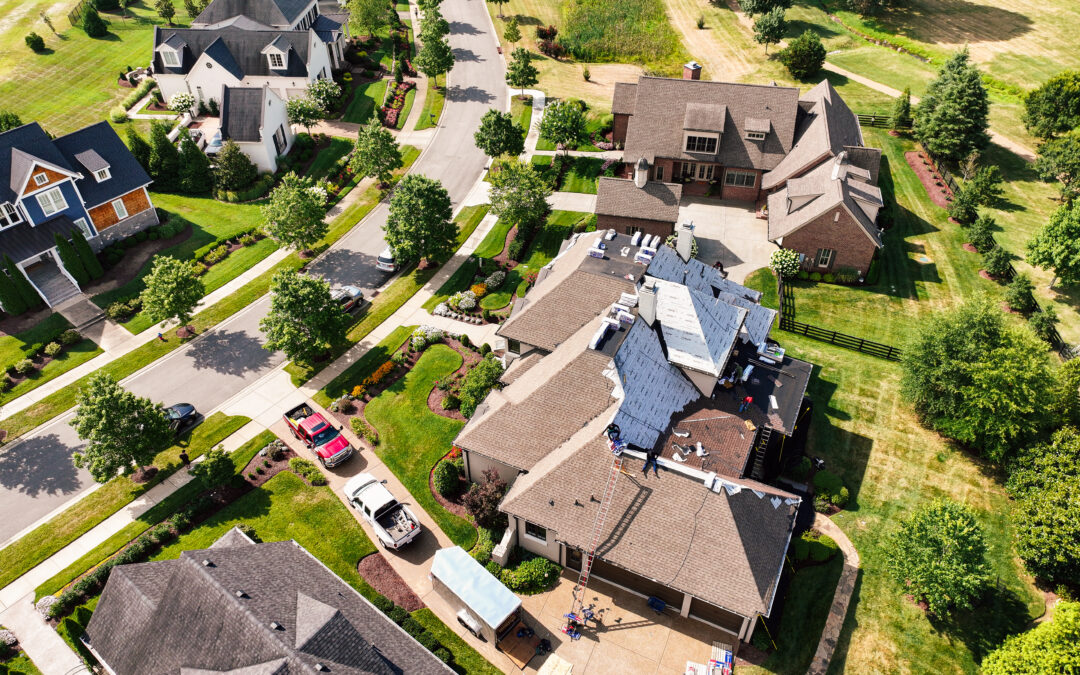
Over the last few years, the roofing industry has seen consistent trends in residential and commercial roofing. Challenges related to supply chain constraints and material shortages gradually eased, allowing roofing companies and property owners to resume abandoned projects. There was a stronger demand from those looking to repair or replace their roofs. Despite inflation and a slower housing market, many homeowners and businesses are investing in their properties from small renovations to complete overhauls.
Many roofing companies saw these aspects play a positive role in residential and commercial roofing trends. Let’s take a closer look at other patterns and trends that have become increasingly popular over the last few years, as well as roofing trends to watch for in the years to come.
Residential and Commercial Roofing Trends
Residential Roofing Trends
One common theme many roofing companies saw amongst homeowners was the desire to renovate and invest in their homes to increase their value. A home’s main selling point is the quality of its roof. Homeowners are sure to see a return on investment from a roof overhaul or proper repair.
Energy-efficient roofing and upgrades remain popular trends among homeowners. Well-insulated roofs lower energy bills, and many homeowners add solar panels for even greater savings. Homeowners also consider solar energy to take advantage of the IRS tax credit. Besides solar panels, quality roofing materials improve home efficiency.
For example, metal, tile, and asphalt roofing materials can reflect sunlight. Subsequently, the most popular roofing material for homes was asphalt shingles in years past. Over time, asphalt shingles emerged as the most commonly used roofing material for residential homes. The team at This Old House indicates that steep-slope asphalt shingles dominate the U.S. roofing market, with a large majority of roofing contractors identifying them as their primary source of income.
Over the past few years, homeowners have come to understand the impact a quality, durable roof can have on their home’s overall sustainability and energy costs. Looking ahead, homeowners are also showing an increased interest in sustainable roofing materials. Due to its durability, metal roofing continues to grow in popularity for residential roofing needs.
Not only can an updated roof, or solar roof, reduce energy costs, but so can color. Homeowners also took advantage of the benefits of a cool, neutral colored roof. This year, earth tones are the most popular. A blend of green, blue, and brown earthy tones has emerged as a standout color in recent years and continues to grow in popularity. Earth tones and neutrals can reflect light off a home’s roof, keeping the interior heated and the air well-regulated.
These colors can also usher in unique aesthetics and eye-catching curb appeal. In recent years, homeowners have opted for roof aesthetics that were sleek colors like earthy browns or modern darks. These timeless, classic colors are both sleek and dramatic, pairing well with modern or classic homes.
Commercial Roofing Trends
Since the pandemic, commercial roofing installations and repairs have increased for businesses and other enterprises.
The commercial roofing industry has recently seen trends similar to residential roofing. Sustainability is a popular goal for many business owners, who want it implemented in their roofs. Green roofs have gained commercial popularity for reducing energy costs and improving durability. Durability itself is a key trend, with business owners selecting resilient materials such as TPO and PVC commercial roofing.
Since commercial properties usually house businesses or organizations, many property owners want to ensure they select roofing materials that suit their specific operations. Of course, business will always be a top priority for business owners, making it a trend that will never go out of style. Business owners tend to choose commercial roofing with standing-seam metal rather than axial metal, as the former offers greater durability and resistance to harsh weather conditions. Metal roofing withstands weather, making it the second-most popular material for both residential and commercial roofs.
Still bouncing back from the pandemic, there was an uptick in commercial roofing installments and repairs for businesses, office spaces, and other commercial enterprises.
Commercial and Residential Roofing Predictions
Between both commercial and residential roofing, one major prediction for years to come is a strong focus on energy-efficient roofs. Solar panels will likely remain a popular option for homeowners to invest in. At the same time, many will also opt for an upgrade to roofing material that reflects sunlight and deflects extreme heat and cold.
There may also be a rise in cool roofing coatings, which are applied to roofs to reduce surface temperatures further, thereby decreasing the external heat impacting residential and commercial buildings. Coatings like these can be additional upgrades to an already stable and durable roof, without a complete overhaul or replacement.
Ultimately, many roofing companies and roofers expect homeowners and businesses to look for ways to lower energy costs through their roofs.
Regarding roof aesthetics, we will likely see a continued trend toward neutral and cool colors, paired with modern, sleek designs, to enhance residential roofing’s curb appeal. Homeowners may also get more involved in the look and aesthetic of their roofs by choosing specific designs and materials that express their creativity.
Minimalist designs are shaping the future of roofing. Clean-lined, flat, and low-sloped roof types are becoming more common in both residential and commercial construction. Homeowners are also incorporating more complex roof features, such as skylights and dormers, to enhance natural light, functionality, and visual appeal.
Commercial roofing will likely continue to trend toward durable, weather-resistant materials. Green roofs and energy-efficient roofing are also likely to remain on trend due to their energy efficiency and overall cost savings.
What Influences Roofing Repair and Construction in Nashville
The Nashville area has seen a 1.3% population increase, with many new residents moving to neighborhoods like Brentwood, Franklin, and Mt. Juliet. Many homes in these areas, particularly Brentwood, are up to 50 years old and may need roof repairs. Since roofs typically last 25 to 50 years, a roof inspection can benefit older homes, especially for new owners.
Another important reason to inspect a home or business’s roof in the Nashville area is the weather common to this region. The music city and its surrounding neighborhoods have had their fair share of snowstorms, extreme heat, and tornadoes, all of which can compromise roof integrity.
At Austermiller, we offer free roof inspections to help you assess your roof’s condition and any needed repairs or replacement. For new installations, we use the Catch-All system to protect your home’s exterior, lawn, landscaping, and HVAC during roof work.
Whether you’re a new homeowner or business owner in Nashville, contact us for a free roof inspection and a repair or replacement plan from our expert roofers.
Common Roofing Materials in Nashville, TN
Nashville and nearby areas often experience severe weather, so homeowners and business owners often choose specific roofing materials for repairs or installations. The two most common roofing materials in Nashville are:
- Asphalt Shingles: With a lifespan of 15 to 30 years, this roofing material is a favorite among roofers and homeowners alike for its versatility and affordability. These types of shingles come in a variety of styles and colors to better reflect the look you want for your home. When properly maintained, asphalt shingles in Middle Tennessee can last up to 30 years, though heat and UV exposure can shorten their lifespan if not cared for.
High-impact asphalt shingles are increasingly popular for their improved durability, weather resistance, and better energy efficiency.
- Metal Roofing: Steel, aluminum, and copper roofs are known for their durability, longevity, and energy efficiency. They resist severe weather, such as hail, strong winds, and snow. In Middle Tennessee, metal roofs are ideal for homeowners seeking a long-term solution. They typically last 40–70 years, depending on the material (e.g., steel lasts 40–60 years, copper can exceed 70).
Metal roofing remains in high demand for its superior weather resistance and sustainability benefits. Homeowners and businesses are increasingly interested in sustainability and recycled materials.
Partner with Austermiller Roofing in Nashville, TN
One way to ensure your home is ready for another year is to have an inspection by an experienced roofer at Austermiller Roofing. They can assess your roof’s condition, share energy-efficient roofing options, and provide insight into which parts of your roof may need repair in the future.
We have proudly served Nashville and its surrounding neighborhoods for over 25 years with high-quality materials, comprehensive service, and roofers you can depend on. Partner with Austermiller Roofing and let us better serve your roof, home, and family.